

What becomes possible isn’t always what we set out to achieve.
POSSIBILITIES STORIES
I didn’t train Milo to run a half marathon.
I didn’t teach Han to jump.
And I didn’t train Russell for Couch to 5K, long-distance cycling or getting onto a paddleboard.
Those possibilities emerged along the way.
The work we had been doing gave each of them opportunities to experience themselves differently — to notice more, learn, adapt and gradually discover things they hadn’t necessarily thought were available to them.
That’s what these stories are about.
Not reaching a final destination.
But what can happen when our experience gives us new information about ourselves.
There is more going on than what we can see.
Our experience isn’t only physical.
What we believe, how we feel, what we can sense, how we organise ourselves and what we eventually do are continually influencing one another.
BELIEFS · EMOTIONS · SENSATIONS · ORGANISATION · ACTION
Sometimes a new experience confirms what we already know.
And sometimes it gives us information we didn’t have before.
That’s where possibilities can begin.
I didn’t teach Han to jump
For a long time, Han had been living with an idea about her knees.
Not necessarily something she consciously thought about every day, but a belief that had gradually influenced what she allowed herself to do.
Then, during one of our sessions, she began to bounce.
There was surprise. Emotion. And the experience of doing something she hadn’t allowed herself to do for a very long time.
Afterwards, Han sent me this:
“I want to also thank you for your openness and support as I face my fear.
When I began to jump yesterday, I realised how long it had been since I last allowed myself to rise and bounce… to feel the lightness in my whole body.
For so long, I had been holding onto the quiet belief that such movements were ‘bad’ for my knees, and without realising it, I built a cage of caution around myself.
But yesterday, as my feet left the ground, something within me shifted.
With each small bounce, a layer of fear lifted…. and in its place, I felt lighter and grateful.”
What was changing?
Beliefs
“Such movements were ‘bad’ for my knees.”
Emotions
Fear and caution had become part of how Han approached this kind of movement.
Sensations
She felt her feet leave the ground and experienced “the lightness in my whole body.”
Organisation
Han described having “built a cage of caution around myself.” Her previous experiences had influenced how she protected herself.
Actions
She allowed herself to jump again.
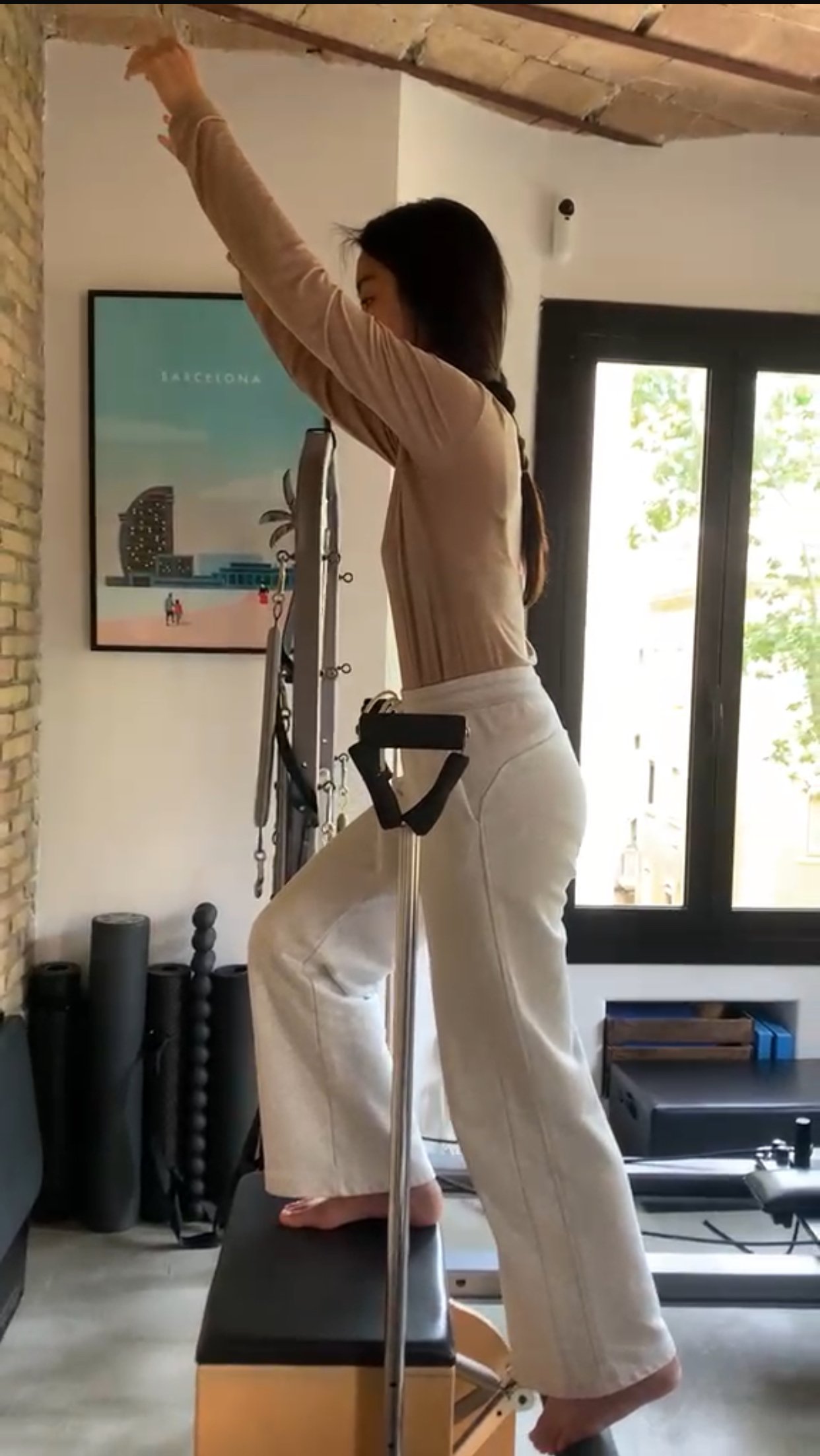
The possibility wasn’t jumping.
I wasn’t trying to prove that Han should jump or that her concerns about her knees weren’t valid.
What mattered was that her own experience gave her new information.
For a moment, something she had believed, something she feared, what she sensed and what she actually did were no longer telling exactly the same story they had before.
Jumping was simply where that became visible. That’s where possibilities can begin.
I didn’t train Milo to run.
When Milo began working with me, his previous experiences of physical activity had repeatedly been accompanied by pain.
In his words:
“Everything hurts whenever I try to engage in physical activities.”
Those experiences had shaped what he expected from movement — including the belief that running simply wasn’t something he would be able to do.
We didn’t begin by trying to get Milo running.
We started small.
Through movement, Milo began paying attention to what he was experiencing — noticing his responses, exploring different ways of moving and gradually becoming more able to adapt when something didn’t feel right.
As his experience changed, so did his confidence.
Later, he described the difference like this:
“What has changed for me is having control now and knowing what to change and how to deal with it when I experience pain.”
What was changing?
Beliefs
“In the past, I never thought I could run.”
Emotions
Repeated experiences of pain had created apprehension around physical activity. As Milo accumulated different experiences, confidence began to return.
Sensations
He began finding ways to adapt and respond rather than experiencing pain as something that automatically ended the activity.
Organisation
He began finding ways to adapt and respond rather than experiencing pain as something that automatically ended the activity.
Actions
He returned to physical activity — and eventually chose to run and participated in a half marathon.
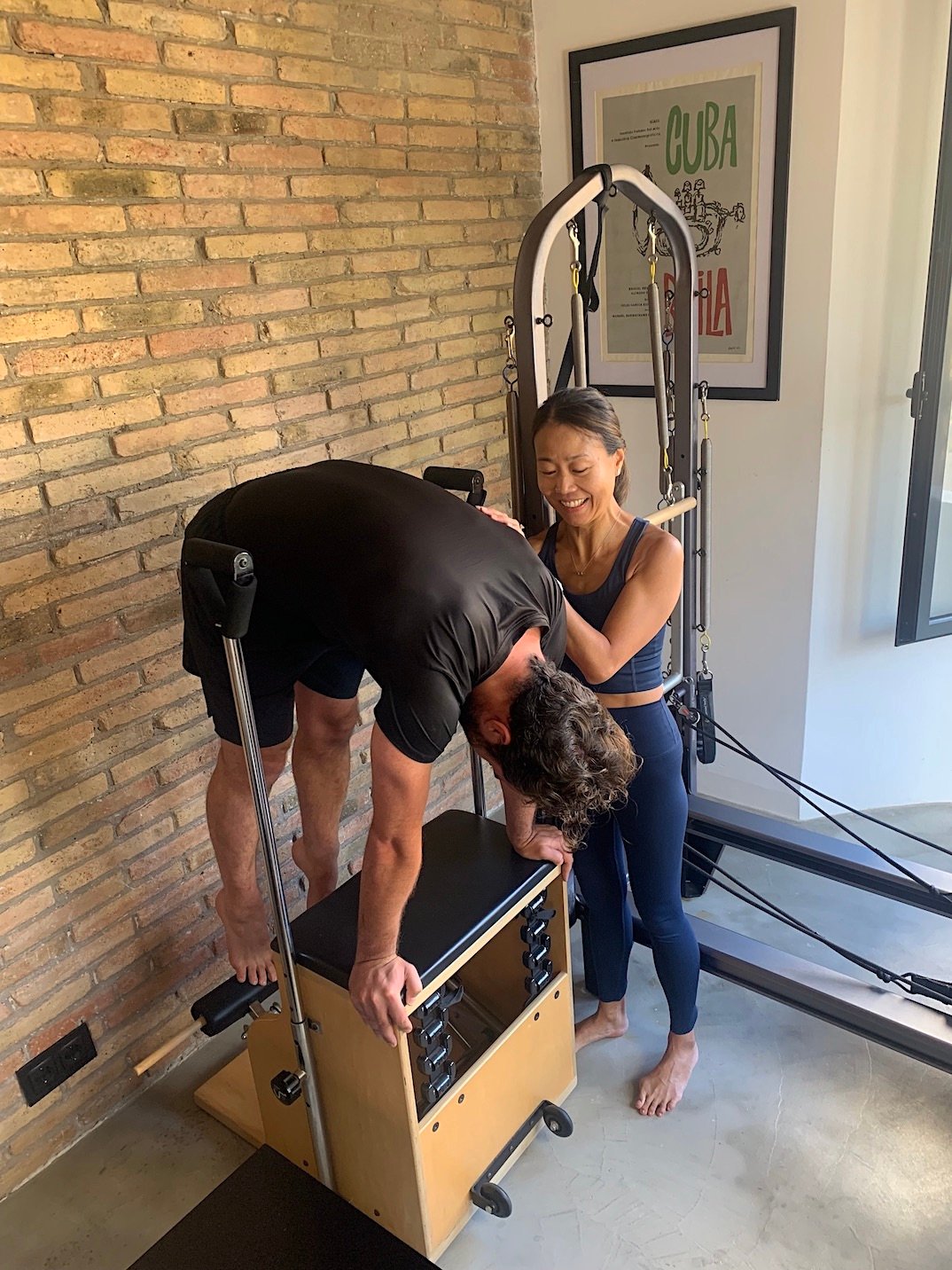
The possibility wasn’t the half marathon.
I didn’t train Milo for a race.
Running emerged later as something he felt able to explore for himself.
Eventually, Milo completed his first Barcelona Half Marathon in under two hours.
That’s a wonderful achievement. But the part of his story that interests me most happened before the finish line:
“In the past, I never thought I could run.”
His experience had given him new information about himself.
The half marathon wasn’t the destination. It was one of the possibilities that emerged along the way.
I didn’t train Russell for any of this.
Russell and I have worked together for several years.
When we began, foot and lower-back pain were part of his experience of movement.
Over time, our work evolved as Russell evolved.
He started Couch to 5K and began running regularly.
He went on to take part in long-distance cycling events.
And increasingly, he began trying things he hadn’t previously thought he could do.
None of these were things we were specifically training for.
And that’s why I loved receiving a message from Russell while he was away on holiday. Getting onto a paddleboard wasn’t something we’d been working towards. We had never trained for it.
It was simply another moment in which Russell took something he’d been learning and used it somewhere completely different.
Then, while he was away on holiday, I received this message:
“Did my first SUP today, and had to use all my balance and core techniques to get ‘up’ on the board!”
What was changing?
Beliefs
Pain and his flat foot had influenced what Russell believed he could do physically. Over time, his experiences began to change those expectations.
Emotions
Russell had been cautious about protecting his lower back. As his experience of movement changed, his willingness to try unfamiliar things grew alongside his confidence.
Sensations
He became more able to notice his balance, support and effort — and use that information as he moved.
Organisation
Rather than needing to rehearse each specific activity with me, he could adapt what he’d learned to different demands.
Actions
He started Couch to 5K, began running regularly, took part in long-distance cycling events — and eventually tried paddleboarding for the first time.
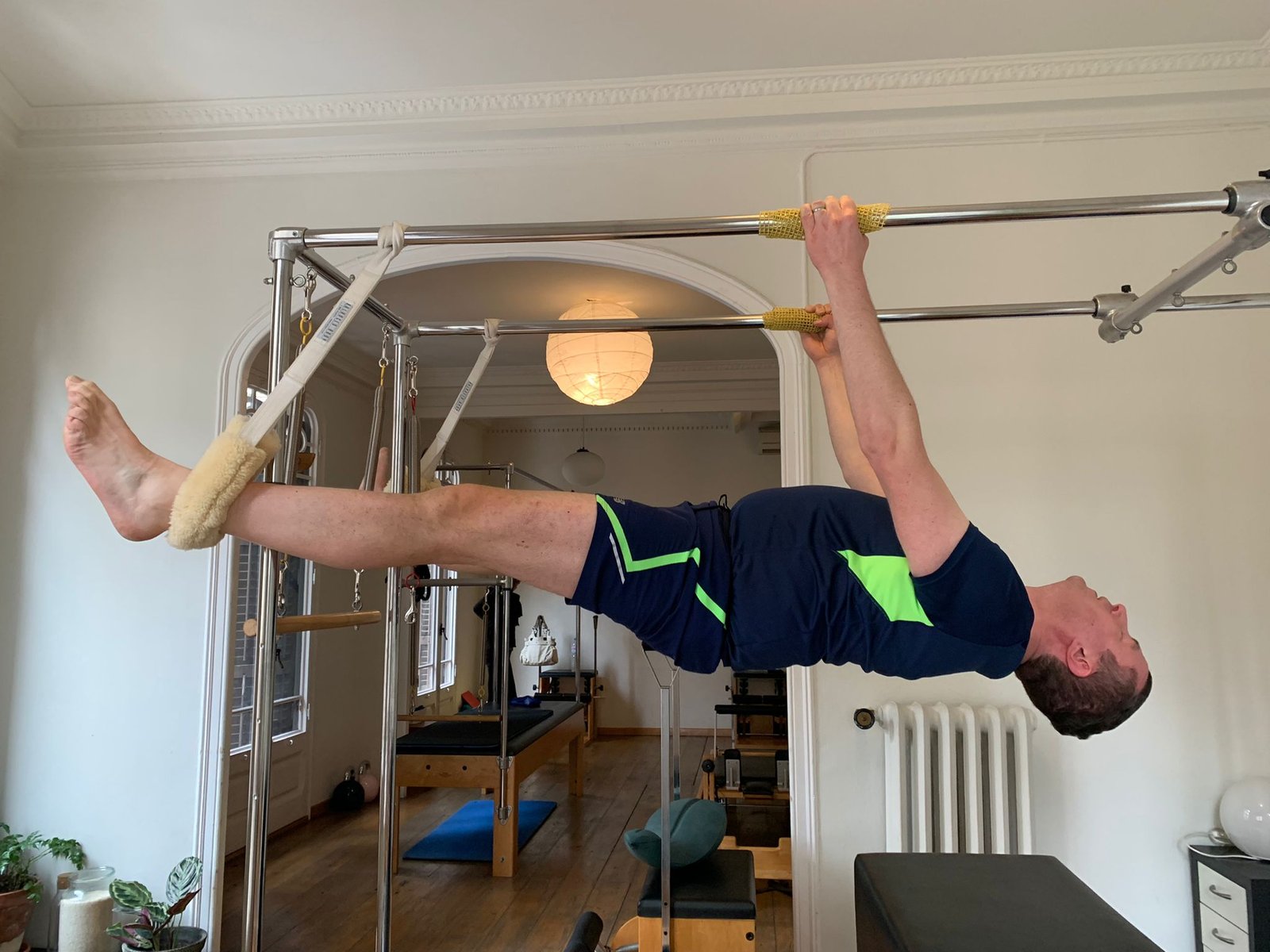
The possibility wasn’t the paddleboard.
Russell once described our work this way: “SooHui is ambitious on my behalf. I’d not have built the strength and connection in my body without her drive to make me a stronger and more flexible person.”
For me, the interesting part is that Russell could take what he had been learning and use it somewhere I wasn’t there.
He didn’t need me standing beside the paddleboard telling him where to put his feet or how to balance. He encountered something new and found a way to respond.
Couch to 5K wasn’t an endpoint. Neither was cycling. Neither was the paddleboard.
They were expressions of a much longer process of learning and one that continues.